green scale fish specimen
Green scale fish, scientific name: Hexagrammos otakii, redfish six-line fish family. The body extension is spindle-shaped, the maximum body length is 60cm (such as green spot six-line fish), and the weight can reach 2kg. Benthic species are mostly brown with dark stripes, clean species with blue-green metallic luster. The first dorsal fin, the base of the gluteal fin and the base of the pectoral fin spines have venom glands, which cause severe pain and swelling after being stabbed. Crustaceans, polychaetes, small fish and algae; use pectoral fin spines to dig bottom sand for food.

Specimen of Green Broad-billed Bird
Green broad-billed bird, scientific name: Calyptomena viridis, passerine broad-billed bird family, round and fat body, broad and short beak, body feather mainly emerald green, throat with chestnut patches, female body color is darker than male birds. Tropical rainforests of Southeast Asia, including Malaysia, Indonesia (Sumatra, Borneo), southern Thailand and Singapore. It inhabits lowland primary forests, secondary forests and bamboo forests, usually below 600 meters above sea level. Banyan fruit (such as figs), berries, insects (beetles, caterpillars) and spiders; wide beak can quickly peel fruit pulp.

Specimen of Greer's grouper
Greer's grouper, scientific name: Cephalopholis cruentata, subfamily of Perciformes Serranidae grouper. The body side has red and yellow stripes, the abdomen is pale yellow, and the dorsal fin, gluteal fin and caudal fin have blue spots. The mucus on the body surface contains slight toxins, which may cause redness and swelling when stabbed. It inhabits tropical and subtropical waters of the western Atlantic, from Florida to Brazil, including the Caribbean, the Gulf of Mexico and the Bahamas. It is inhabited in coral reef and rock reef area, with water depth of 1-50 m, preferring sand and mud bottom or gravel gap. The staple food is small fish, crustaceans (shrimp, crab) and cephalopods.

Gannet Specimen
Gannet, scientific name: Morus bassanus, gannet family Booby. The largest gannet, with a body length of 80-100cm and a wingspan of 165-180cm, has a long beak with an inflated tip, pure white feathers, black wing tips, and blue-green bare skin at the base of the beak. North Atlantic and North Pacific temperate and frigid waters, breeding sites concentrated in Canada, Ireland, the United Kingdom, Iceland and the northern islands of Japan. Non-breeding period spread to tropical waters, but rarely deep into the equator. The staple food is sardine, mackerel and other cluster fish, which can catch 1-3 fish in a single dive. Young birds need adult individuals to feed with ruminant and semi-digested food.

Galapagos Tortoise Specimen
The scientific name of Galapagos tortoise (Galapagos giant tortoise): Chelonoidis nigra, tortoidae, is one of the largest tortoises with a shell height of 1.2 meters and a weight of 417 kilograms. The carapace is dome-shaped or saddle-shaped and is differentiated according to subspecies. The life span can reach more than 150 years. Cactus, vines, grass as staple food, gastric acid strong acid decomposition of wood fiber. The rainy season replenishes petals and fruits, and the dry season relies on lichen and prickly pear cactus.

flying fish specimen
The family Scorpon (Dactylopterus volitans) is found in tropical and subtropical Atlantic waters, including the southeastern coast of the United States, the Gulf of Mexico, the Caribbean Sea, Brazil to Argentina, and occasionally in the Mediterranean Sea. It inhabits the sandy sea bottom, usually 10-300 meters deep. It feeds on crustaceans (shrimp, crab) and mollusks (clams, worms) and uses pectoral fin pads to detect prey in the bottom sand.

Specimen of Florida Sparrow Eel
Florida sparrow eel (scientific name: Lepisosteus platyrhincus), sparrow eel family, is cylindrical in length, usually 80-150cm in length, and the largest individual can reach 2 meters. It is mainly found in the freshwater and brackish waters of Florida and the Gulf of Mexico, such as the rivers, lakes and marshes of the Florida Peninsula, and occasionally in southern Georgia. Fish (such as snakehead fish, sunfish), crustaceans (shrimp, crab), amphibians and aquatic insects as staple food, using ambush strategy to raid prey.
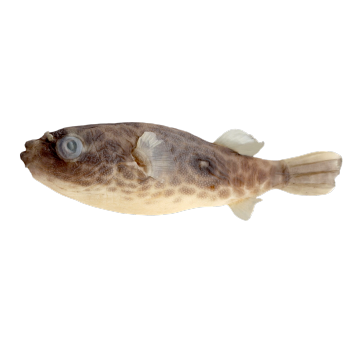
Fugu fangs specimen
Puffer fangshi (scientific name: Takifugu fangshi), puffer family, with small spines on the body surface, white abdomen, dark brown spots on the back, extremely toxic. It is mainly distributed in the southeast coast of China (East China Sea, South China Sea) and the southern waters of Japan, and inhabits the coastal shallow sea (5-50 meters) and the semi-salty area of the estuary. The body is short and round, flat on the side, the body length is usually 15-30cm, and the largest individual can reach 40cm. The body surface is densely distributed with small spines, the back is dark brown with irregular dark spots, the abdomen is pure white, and the pectoral fin is followed by black eye spots. Carnivorous, small fish, shrimp, crabs, shellfish for food, the use of sharp teeth tore prey.

False Panther Catfish Specimen
False leopard catfish (scientific name: Loricaria sima), a catfish family, the body surface is covered with bone plate scale armour, the mouth is wide and sucker-shaped, the body side has dark markings, resembling a jaguar, hence the name "false leopard catfish". Mainly distributed in the Amazon basin of South America and the coastal freshwater area of Guyana, it is common in the silt bottom waters of the slow-flow bottom or flood plains. The body is elongated, flat on the side, the body length is usually 30-60cm, and the maximum individual can reach 80cm. The omnivorous partial carnivorous, with algae, humus, small fish, shrimp, insect larvae as the staple food, the use of sucker-shaped mouth scraping attachment.

Oriental rainbow fish specimen
Oriental rainbow fish (scientific name: Melanotaenia splendida splendida), rainbow silver Han fish family, is one of the most representative varieties of rainbow fish. Mainly distributed in the eastern coastal freshwater basins of Australia, such as rivers, lakes and marshes in Queensland, New South Wales and Victoria. The body side is flat and spindle-shaped, the body length is usually 8-12cm, and the largest individual can reach 15cm. The body surface has a metallic luster, and the body side has a wide iridescent longitudinal band (blue, green, orange, red gradient) from the operculum to the caudal fin, and the abdomen is silvery white. omnivorous, with algae and aquatic plants as staple food

drifting catfish specimen
Drifting catfish (CathoropsAguadulce), Acanthopanaceae is mainly distributed in the tropical freshwater and brackish freshwater junction waters of Central and South America, such as the Amazon River, Orinoco River, La Plata River basin, some species spread to Mexico and Central America. Preference for slow-flowing waters, often adsorbed on the surface of fallen wood, rocks or water plants.

Dolphi specimens
Dolphin (Coryphaena hippurus) (also known as ghost head knife, marlin) Dolphin, streamlined shape, dorsal fin and gluteal fin as tall as a sail, body side with metallic luster, male head uplift helmet-shaped. Global tropical and temperate waters (40 ° N to 40 ° S), such as the surface to 100 m deep waters of the Atlantic, Pacific and Indian Oceans. Seasonal migration with the warm current, such as the North Atlantic dolphin, often migrates to the North Atlantic waters in summer. To fly fish, sardines, squid and other small migratory fish and cephalopods as the staple food, the use of high-speed pursuit of hunting.

Ghost Shark Specimen
Chimera, the ghost shark (Chimaera) has a long head of bone nail, a slender tail such as a whip, and a gill cleft located in front of the head (unlike sharks), with power generation capacity. Global distribution of deep-sea cold waters (200-3000 meters), such as the Atlantic, Indian Ocean, Pacific abyssal plains and trenches, rarely into the shallow sea.

Chain Cat Shark Specimen
Chain cat shark (Halaelurus lineatus) chain cat shark is a cat shark, body surface with chain-like markings, large eyes, gill is located on both sides of the head, tail fin wide. It is mainly distributed in the Indian Ocean-Western Pacific Ocean, such as the South China Sea, the Ryukyu Islands of Japan, the Philippines, and Indonesia. It inhabits the sandy sediment waters on the edge of the continental shelf, with a water depth of 50-500 meters. The body is elongated, flat on the side, the body length is usually 30-60cm, and the largest individual can reach 75cm. The body color is grayish brown or tan, with dark chain markings on the body side (hence the name "chain cat shark"), light-colored abdomen, rough skin and fine shield scales.

Taole Catfish Specimen
Tao Le Catfish family (Doradidae), including about 30 genera and more than 200 species, such as spotted Tao Le Catfish (Doras hancockii), spiny Tao Le Catfish (Doras carinatus), etc. The body surface has bone plates or spines, no scales, wide mouth, must be developed, suitable for benthic life. Mainly distributed in the tropical freshwater basins of South America, such as the Amazon River, Orinoco River, La Plata River basin, a few species spread to Central America. Omnivorous partial carnivorous, algae, aquatic plants, small fish, shrimp, insect larvae as the staple food, juvenile fish dependent on plankton.

Crocodile flounder specimen
Crocodile flounder (scientific name: Cynoglossus acuticeps, English name: Crocodile Tongue Sole) is mainly distributed in the Indian Ocean-Pacific Ocean, such as Indonesia, Philippines and northern Australia, and inhabits shallow seas (50-200 meters) with sandy sediment. The body side is flat, the eyes are located on the left side, the mouth is asymmetrical, resembles the crocodile head, hence the name. Population decline due to indiscriminate bottom trawling and habitat destruction (coral reef degradation).

Catfish Specimen
Catfish, catfish (Siluriformes), contains more than 4000 species of about 36 families, covering catfish, beard catfish, earth catfish, etc. Global freshwater and brackish water junction, mainly distributed in tropical to temperate regions, such as Africa, Asia, South America. Some species (e. g., Egyptian catfish Clarias gariepinus) have spread globally due to farming, but are rarely invasive. With algae, aquatic plants, small fish, shrimp, insect larvae as the staple food, juvenile fish rely on plankton.

grass carp specimen
Grass carp (Ctenopharyngodon Idella) is a fish animal of the genus Grass Carp in the family Cyprinidae. Grass carp is long, slightly cylindrical, with flat tail, round abdomen and blunt head. The end of the mouth is curved and does not need to be. The maxilla is slightly longer than the mandible. The eye is small and the eye diameter is smaller than the kiss length. The hypopharyngeal teeth are comb-shaped with transverse furrows on the tooth side. Scales of medium size, lateral scales; The body is tea yellow, the abdomen is gray, the chest and ventral fins are slightly gray yellow, and other fins are dark. [15] Because of its staple food water plants, hence the name. [16] together with herring, silver carp and bighead carp are called "the four major fish".

Carp specimen
Carp (scientific name: Cyprinus carpio, Cyprinidae) is one of the most widely distributed and economically valuable freshwater fishes in the Cyprinidae. It is widely distributed in rivers, lakes and reservoirs in Eurasia. It has been domesticated by humans for more than 2000 years because of its strong adaptability and high fecundity, and is known as "the cornerstone of freshwater culture". Eurasia temperate to tropical freshwater basins, such as the Yellow River, Yangtze River, Volga River, Danube River. Freshwater ecosystems in North America, Australia and other places, some species become invasive species (such as koi flooding in North America).
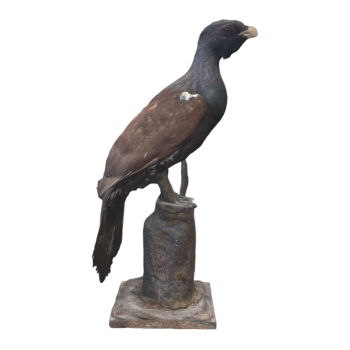
Big grouse specimen
Big grouse (scientific name: Tetrao urogallus) is the largest bird in the grouse. It is distributed in the cold temperate coniferous forest and mixed forest in Eurasia. It is known as "Thunderbird in the forest" because of its unique courtship behavior and ecological importance ". Distributed in Scandinavia, northwestern Russia, the Alps. Siberia, northern Mongolia and the Daxinganling region in northeast China. It relies on mature coniferous forests (such as spruce and fir) and forest edge shrubs, preferring areas with deep snow cover and sheltered wind.

Borneo River herring specimen
Borneo River herring (scientific name: Sardinella borneensis, English name: Borneo River Sprat) is a small migratory fish endemic to Borneo Island in Southeast Asia. It is mainly distributed in the freshwater and estuarine ecosystems of the island and is an important resource for local fisheries. It belongs to the family Herring, which contains about 20 species of river herring and is a common group in tropical and subtropical waters and freshwater basins. It is endemic to the Kapuas, Barito and Kinabadang river basins on Borneo Island, commonly found in floodplains, estuaries and low-salinity coastal waters, and occasionally in offshore waters.

Specimen of Orinoco River Pomfret
The Orinoco River short jaw carp belongs to the family Prochilodontidae (Characiformes), including about 20 species of short jaw carp (Prochilodus). It is a small economic fish unique to the Orinoco River Basin in South America. It is an important local food fish species and is famous for its tender meat and strong fecundity. Mainly distributed in the Orinoco River basin in South America, common in the main stream, tributaries and floodplain lakes, preference for sandy or gravel bottom of the lower waters.

The stuffed weasel
The mustard (scientific name: Barbulifer ceuthoecus, family name: Ophidiidae) is a small carnivorous fish distributed in the deep-sea bottom of tropical and temperate waters. It is named after its fleshy tentacles and is a mysterious "hermit" species in the deep-sea ecosystem. It belongs to the family Mustelidae, including about 20 genera and more than 150 species, such as the genus Mustelia and the genus Mustelia. It is mainly distributed in the tropical to temperate waters of the Atlantic Ocean, Indian Ocean and Pacific Ocean, and is common in the deep ocean bottom (water depth 100-1000 m) at the edge of the continental shelf, especially in rocky or coral reef slope areas.

Catfish Specimen
Catfish (scientific name: Bagridae family, representing species such as the long-snout Leiocassis longirostris) is a kind of carnivorous benthic fish distributed in the freshwater waters of Asia. It is famous for its wide head, scaleless body surface and delicious meat. It is an important economic fish. It contains about 20 genera and more than 100 species, widely distributed in freshwater basins in East Asia, Southeast Asia and South Asia. It is mainly distributed in the Yangtze River, Yellow River and Pearl River basins in China, the Mekong River, Salween River in Southeast Asia and the rivers, lakes and swamps in the Ganges Plain of India. It is common in the bottom slow flow or still water area.

Popular Models
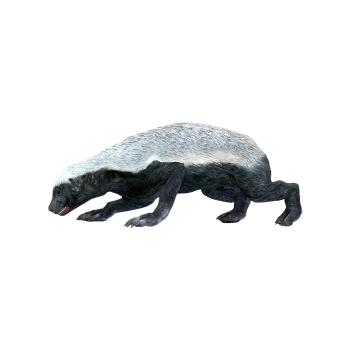
Honey Badger (3D animated model)
192 View
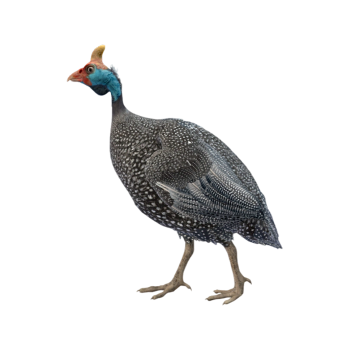
Guinea fowl (3D animated model)
163 View
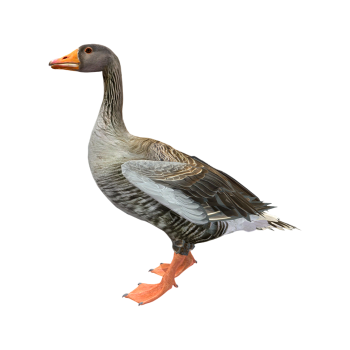
Wild Goose (3D animated model)
185 View
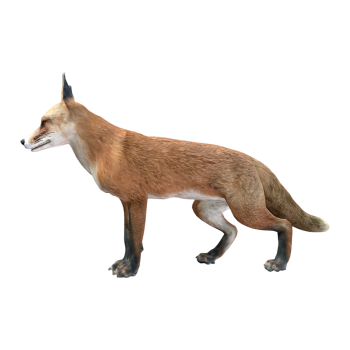
Red Fox (3D animated model)
153 View
Random Model
Wood carving "Lion Rock"
416 View


Zeiss Ikon 532/16 Folding Camera
899 View


Square cement flowerpot
498 View

Sony PSP portable game console
1061 View

Bamboo storage basket and dustpan
417 View